
A grade without a desk: What to do when schools are full
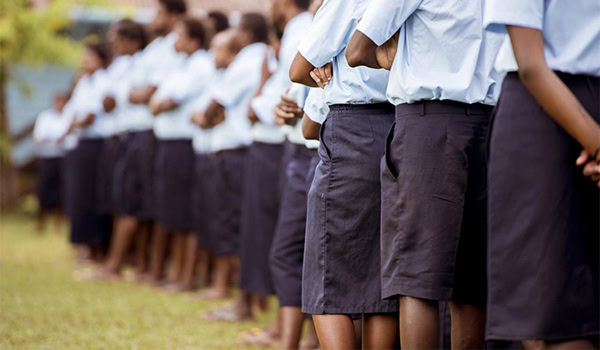
Every January, tens of thousands of South African learners have a grade, a uniform and a freshly labelled lunchbox – and nowhere to actually sit. Here’s the honest version of why it keeps happening and what you can do if your family lands on the wrong side of the statistics.
It’s mid-January. The taxis are running, the stationery is labelled down to the last glue stick and the new shoes are already pinching. There’s just one problem: your child doesn’t have a school to wear them to.
Somewhere on a government portal, a status bar reads “Application is being processed.” You’ve refreshed it nine times since breakfast. If that scene makes your stomach drop, you’re not being dramatic and you’re definitely not alone.
The numbers nobody prints on the back-to-school checklist
When the 2025 school year opened on 15 January, the Department of Basic Education confirmed that 28,371 learners across the country still had no school to report to. Officially, that’s a 99.2% placement rate – a figure that sounds wonderful right up until you’re one of the 0.8%. By the end of that January, Gauteng and the Western Cape were carrying the heaviest load.
The 2026 cycle told the same story in fresh numbers. As of 12 December 2025, the Gauteng Department of Education reported 15,144 Grade 1 and Grade 8 applicants (4.2%) were still waiting for a place – 4,498 in Grade 1 and 10,646 in Grade 8 – while 721 schools (458 primary and 263 secondary) had already hit full capacity.
Here’s the part we won’t bury: the system does grind through most of the backlog. By 6 January 2026, Gauteng’s unplaced figure had fallen to 4,858. But notice the word doing the heavy lifting – eventually. For the family living it, “eventually” can mean a child sitting at home for the first six weeks of the academic year.
A confirmed grade is not the same as a confirmed seat. The gap between them is measured in weeks of lost learning.
Why this keeps happening (and why it isn’t your fault)
It’s tempting to read a rejection letter as a personal failing. It isn’t. The placement squeeze is structural and the causes stack on top of each other: families relocating between provinces, late applications, parents understandably holding out for a preferred school, a bulge of entry-grade pupils, the phased rollout of compulsory Grade R under the BELA Act, and urban areas where the popular schools were oversubscribed long before your form arrived. Add teacher-post baskets that have stayed frozen in several provinces while enrolment climbs and you have a system running hot every single January.
Knowing it’s structural doesn’t get your child a desk. But it should take the self-blame off the table.
A desk is not an education
This is the reframe that matters. When a learner is “unplaced,” we talk as though they’re waiting for a piece of furniture. They’re not. They’re waiting for routine. For the rhythm of a school day. For the quiet confidence of knowing where you belong at 8am on a Monday. For friends, for momentum, for the simple sense of moving forward with everyone else.
That’s why the real question was never “online school or brick-and-mortar school?” The real question is: should any child have to press pause on their education because a building ran out of space? We’d argue no.
What to do if your child is one of the unplaced for 2027
If you’re in the thick of it right now, here’s where to put your energy.
- Keep applying – and widen the net.
Holding out for one dream school is the single most reliable way to stay unplaced.
Apply to more schools than feels comfortable, including a few a little further afield. You can always decline an offer; you can’t accept one you never applied for. - Get everything in writing.
Admissions decisions can be appealed – but only if you’ve kept the paper trail.
Save every reference number, screenshot every status change and note the date of every phone call. If you need to lodge an appeal or escalate, that record is your strongest asset. - Don’t let the learning stop while the paperwork moves.
Six weeks out of a classroom is six weeks of momentum you’ll have to rebuild.
Keep your child reading, writing and doing maths daily, even informally. The goal is that when a desk opens up, they walk in ready – not behind. - Treat a physical seat as one route, not the only one.
Geography and capacity are the two things online learning removes from the equation entirely.
If the local system is full, a recognised online curriculum can keep your child learning from day one rather than week six.
The honest bit
Online school isn’t the right answer for every family and we’d be doing you a disservice to pretend it is. Some children thrive on the structure of a physical building and a ringing bell. Some parents simply can’t be home during the day. Some learners need the in-person social hum that a screen can’t fully replace. If that’s your family, a traditional school is worth fighting the placement queue for.
What online learning is genuinely good at is the one thing the placement crisis lays bare: it never runs out of desks. There’s no catchment area, no capacity audit, no “sorry, the class is full.” That’s not a small thing when 721 schools have just closed their doors for the year.
Where Think Digital Academy fits in
If you’ve reached the end of the queue and your child still doesn’t have a seat, this is the part worth knowing. Think Digital Academy is a five-time Virtual School of the Year, and our model simply doesn’t have a “full” sign to hang on the door. Because we’re built to be accessible and scalable, we don’t cap registrations the way a physical school has to.
You can choose from three globally respected curricula – British International, South African CAPS, and the United States GED – with qualified teacher support, structured lessons and an Umalusi-accredited matric recognised at local and international universities. And you can try the whole thing first: our 14-day free trial lets your child start learning while you decide – no waiting list required.
Think Digital Academy learners are:
- Never told “sorry, the class is full”
- Learning from day one of term, not week six
- Studying a recognised, university-accepted curriculum from anywhere with a connection
- Supported by qualified teachers and structured but flexible lessons they can shape around their lives
- Free to start today, on a 14-day trial, while the rest of the queue keeps refreshing the portal.
Because no child should have to wait for a desk to start their education.