4 Reasons why children lose interest in conventional school classes
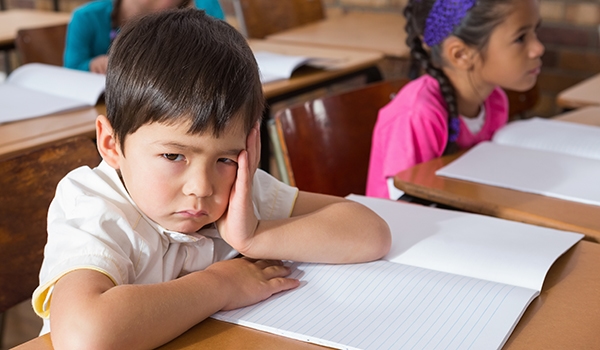
According to the British Council, a child’s maximum attention span is roughly two to three times their age. For instance, if your child is 8, their attention span will be anywhere between 16 and 24 minutes. If they’re 9, their attention span will be between 18 and 27 minutes, and so on. The older children get, the more attention they pay.
Unfortunately, young children are at a greater risk of getting distracted. This can negatively impact their schooling experience. If your child frequently zones out in class, they could miss out on a significant portion of their lesson, perhaps even most of it.
Children who aren’t reeled back into the lesson by their teachers struggle to learn as well as their peers. Since they fail to absorb a significant amount of the lesson, they retain less. Consequently, they perform poorly in assessments. They also struggle to participate in class, stay on track during class activities, and achieve consistent academic growth.
If your child has been having trouble with concept recollection, ensure that you address the root problems to help them get back on track. In this article, we’ll offer a closer look at some common reasons why younger students have difficulty retaining concepts in school. Take notes, keep your child’s unique learning traits in mind, and implement the right changes to undo the damage.
Inability to concentrate
As stated earlier, many young students struggle to concentrate in class. This is because of no fault of their own. Young children are in an active developmental and learning stage. They’re immensely curious and eager to learn.
Often, their curiosity compels them to fixate on a number of things within a short time span. For instance, if a child is working on their Math homework, they could easily lose focus and fixate on a superhero figurine placed on their desk. Two minutes later, their attention may divert to a pet that’s chasing an insect nearby or an oddly shaped cloud that’s peeking through the window.
Children are thirsty for newness. It excites them and, most importantly, piques their interest. As they struggle to concentrate in class, children retain less.
As a parent, you can take several measures to ensure that your child gets the most out of their learning journey. We recommend taking a closer look at the mode of learning you’ve chosen for your child. Have you selected conventional in-person, online, or flexible schooling? Following the COVID-19 pandemic, the benefits of online and flexible schooling have become more evident.
As children were required to spend over a year-and-a-half attending online school during the pandemic, many parents worried that their personal growth and social development would be affected, and rightfully so. When examined from the surface, online schooling sounds questionable as there’s a lack of in-person interaction. However, once students switch to online learning and acclimatise to it, ample personal growth and social development opportunities become apparent.
At Think Digital Academy, our students are taught by a team of experienced, committed, and passionate MA/PhD qualified subject specialist teachers.
Unfortunately, with most conventional schools, the student-teacher ratio is fairly high. Oftentimes, as many as 30 (or even more) students are taught in one classroom. Needless to say, teachers struggle to provide one-on-one attention to every student. They are unable to help distracted students regain an interest in the lesson; there are simply too many students in a class, with too little time for teachers to manage this task.
The risk of students zoning out during lessons is significantly reduced when the online schooling model is used. As children are taught using a variety of multimedia such as audio, string visuals, videos and interactive quizzes, they are consistently kept on track.
Boring, tedious, and unengaging lessons
As a parent, you may think that something is wrong with your child if they’re struggling to retain concepts learnt in school. This isn’t necessarily true. In many cases, students are unable to effectively absorb and retain knowledge because they’re made to sit through boring, tedious and unengaging lessons. Many schools aren’t focused on making lessons more interactive, stimulating or fun for students.
As highlighted earlier, younger students have a short attention span. If something doesn’t appeal to them, interest them or excite them, they’ll zone out. As a teacher, understanding this is imperative.
At Think Digital Academy, we leverage advanced audio-visual technology to make our online lessons fun, engaging, exciting and appealing for younger students. From incorporating fun activities into lessons to adding interactive quizzes, we have developed our lessons to help students learn better and reduce the chances of students getting bored.
You can take similar measures to help your child perceive their education as something that’s fun, not complex and boring. Once your child completes their lessons for the day, plan fun activities that reinforce the concepts they learned online, in an engaging and stimulating manner. For instance, if they learned about magnets in Science, plan a fun project that excites them. See some inspiration!
Once we’ve covered the theoretical aspect of a certain topic or sub-topic in our online lessons, we follow it up with an activity to ensure that students understand the concept and are able to effectively apply it. This approach increases knowledge retention among students.
Hectic scheduling
Young children are active, enthusiastic, and always ready for a new adventure. However, this doesn’t mean that their schedule should be so hectic that they feel drained, exhausted and overwhelmed by the end of the day. Many conventional schools have this effect on young students. As they shuffle in and out of classes for hours, they’re worn out by the time they return home.
When the brain is deprived of sleep and the body is utilised beyond its capacity, it becomes harder for children to concentrate and remember things, and as a result, it impacts their learning negatively. Children who feel physically and mentally drained by the end of the day are at a greater risk of developing behavioural problems, suffering from poor academic growth and experiencing anxiety. Their alertness levels are also reduced, which results in poor knowledge absorption and retention of information.
If your child performs a task that requires logical reasoning, they’ll struggle to complete it. When their brain development is affected, their neurons will be overworked to the point that optimal or even regular performance cannot be achieved. Children begin to lack in one aspect or another: mentally, emotionally, physically, academically, athletically, personally or socially, etc.
As a parent, take this seriously. If your child feels extremely tired by the end of the day, they’re being overworked. Switching from conventional to online schooling is a great way to undo the damage. Since online schooling is more focused, students aren’t required to sit through protracted lessons. They retain a lot of energy that is otherwise wasted in a conventional schooling environment. This energy can instead be utilised for skill-building games and activities, sports, arts and crafts, excursions, explorations, socialisation and personal enrichment after school. Students can explore new hobbies, interests and activities.
Ensure that your child’s school doesn’t solely focus on academic growth. Holistic learning is imperative for all students, especially young children. Unfortunately, many schools place unhealthy pressure on children, which affects their mental health. A wholesome, balanced, and well-paced online learning environment will help your child understand and recall their lessons better. They’ll also perform exceptionally well in other non-academic facets of their life.
Lack of empathetic guidance and coaching
While students need strong academic support from their teachers, they also need empathetic guidance and coaching from their parents. This is imperative for young students who are still actively developing, learning, and growing. Owing to their age, they’re more vulnerable to everyday stressors and triggers. Children can easily get upset and feel frustrated. If they aren’t provided the support they need, they may act out in class, zone out, or feel neglected.
It’s possible that your child performs exceptionally well in class but still struggles to retain their lessons. In this case, there may be an underlying issue that needs to be addressed.
Children have memory issues when they feel stressed, don’t get enough sleep, or feel hungry. Think Digital Academy makes use of audio-visual cues, comprehensive study notes, teach concept-related rhymes and songs, break information into smaller bites and build important connections. These are just a handful of strategies that are utilised to boost children’s memory.
By allowing students to re-take lesson quizzes as many times as they need to, we help them perform better and feel more content about their educational journey. Happy learners are successful learners. By helping children feel happy and excited about their lessons, we are able to increase their interest in academics. This, in turn, helps them stay on track and perform exceptionally well.
If you’re considering making the switch to online schooling for your child, take a closer look at our various curricula offered (Grade / Stage R – 12 / AS Levels).
Free trial
Why not try our online learning environment by enroling for our free 14 day trial.