• Free trial
  • Enrol
  • Login
International online school - study from anywhere in the world
Think Digital Academy
  • About
    • About us
    • Our key services
    • Prospectus
    • Accreditation and certification
    • Countries and regions
    • Awards and recognition
    • Reviews
    • Media releases
    • Contact us
  • Curricula
    • British International
      • Overview
      • Early Years – Stage R
      • Lower Primary (Stages 1 – 3)
      • Upper Primary (Stages 4 – 6)
      • Lower Secondary (Stages 7 – 8)
      • GCSE
      • AS Level
      • FAQs
    • South African CAPS
      • Overview
      • Primary (Grades R – 7)
      • High (Grades 8 – 12)
      • Adult Matric
      • FAQs
    • United States GED
      • Overview
      • FAQs
  • Courses
    • Winter School – Maths and Science for matrics
    • Coding and Robotics
    • Mind Power for Kids
    • Mind Power for Teens
    • Social Media for Kids
    • Social Media for Teens
  • Fees
    • Annual tuition fees
    • Short course and winter school fees
    • Special offers
  • Info
    • How to get started
    • Stationery and equipment
    • Suggested school terms
    • Glossary of terms used
  • FAQs
    • General
    • Fees and payment
    • Cambridge International
    • South African CAPS
    • United States GED
  • Read
    • Think Tank blog
    • Reading Room
    • Think Digital News
  • Social
    • About our clubs
    • Art Club
    • Cartoon and Anime Club
    • Dance Club
    • Drama Stars Club
    • Jewels and Jems Club
    • Mathletes Club
    • Movement Society
    • Pilates Club
    • Science Club
    • The Zen Club
    • Time Travellers Club
    • Yoga Club
  • Hubs
    • Find a coaching hub
    • Register a coaching hub
  • Click to open the search input field Click to open the search input field Search
  • Menu Menu
Think Tank

How children learn

Tips for parents
How children learn - the VARK method explained

Written by Kristal Williams

Each of us has a differing learning style. Einstein once said, “Everybody is a genius. But if you judge a fish by its ability to climb a tree, it will live its whole life believing it is stupid.” This has never been truer than it is today. We face a world where varying learning challenges cause many students to seek alternatives to conventional learning and as a result, feel inadequate.

Many parents, teachers and learning coaches wonder if there are other holistic teaching methods which can assist their students to obtain good results and still thrive. Perhaps the question we should all be asking is; “ Why not start exploring methods that meet our children where they are?” There are three methods which were specifically founded to address the four learning styles. Those methods are known as Kolb’s learning method; Dunn & Dunn; and Fleming & Mill’s VARK method. Our topic for investigation today will be on the VARK method.

The VARK Method

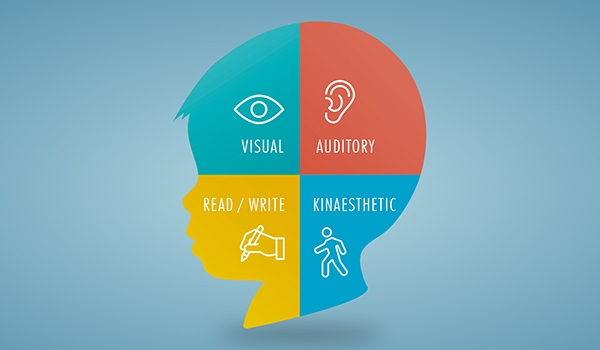
There are four different methods used by VARK to address the different learning types. These learning styles are collectively called “VARK” and represent the four different learning styles: visual (or spatial), auditory (or verbal), reading & writing and kinaesthetic (or tactile). This method was established by Neil Fleming in 1987.

Visual or Spatial

Visual learners have a tendency to follow instructions. These students have natural balance and alignment. They are very good organisers and are able to note even the slightest difference in people and objects. These students also have the ability to envision imagery very easily and thus are able to envision passages in a book very easily.

In order to help these learners with their learning, try looking at highlighting important words in colour or perhaps examining headings and pictures before going through the text. These learners need to be in a position where they are able to see their teacher at all times when in a brick and mortar classroom. These learners should also take their own notes.

Auditory or Aural

Auditory learners recall information that is spoken to them, such as instructions or passages in a book that are read aloud. They have good articulating skills, which are also accompanied by strong listening skills. They excel at oral exams and do best while reading aloud.

They benefit from group discussions and, if you play background music, you will help them to concentrate better. However, background noises tend to distract them, so try to limit that kind of noise. These learners will often ask for verbal instructions and work best when given these kinds of instructions.

Kinaesthetic or Tactile

Learners who are kinaesthetic have to be kept busy in order to facilitate their learning. This is achieved by engaging them in physical activities as opposed to a simple lecture or demonstration. They require a hands-on experience such as experimenting or testing, trial and error. This kind of learning could be excursions or simply leaving the classroom. They enjoy building things and working with their hands and thus would love to create things.

Allow a kinaesthetic learner to participate in physical activities, and allow them to express themselves in order to engage in their lessons. Activities such as class games or even treasure hunts are other means by which you can engage these learners in their lessons. Give them tactile stimulation with objects such as pipe cleaners, slime and playdough. They are also better at sign language than most learners because of their extremely expressive nature.

Reading & Writing

This specific branch of VARK is thought to be a sub-type of Visual learning. This learner understands concepts better when they write their lessons down or read them. This is because they absorb more information through words. They do very well with text-based assignments as well as written quizzes or otherwise written assignments. When this learner is working with charts or diagrams, let them write them out as words as they absorb text better than they do images. These learners find that writing, reading articles and taking notes are very helpful when learning.

In order to aid these learners in the learning process, convert their notes into a learnable package by reducing the notes to a manageable size. Writing words over and over again can help these learners absorb more information. These learners should go through their notes quietly over and over again as well as do any extra suggested reading. They should make use of digital devices to organise their ideas as well as help them learn new words. They will need to use multiple lists to help them distinguish each concept from the other.

With these particular learners, study methods such as taking lots of notes, rewriting them and going through them again and again as well as keeping study notes/summaries and making bullet-point lists will help them remember more.

Conclusion

When all is said and done, we are a combination of many of these learning types, with some more dominant than others. VARK is simply a method by which we can identify all these dominant learning methods as well as how to address them as parents, teachers and learners.

According to Fleming and Baume, “VARK above all is designed to be a starting place for a conversation among teachers, tutors, parents and learners about learning. It can also be a catalyst for staff development – thinking about strategies for teaching different groups can lead to more, and appropriate, variety of learning and teaching.”

April 6, 2022
Share this entry
  • Share on Facebook
  • Share on X
  • Share on WhatsApp
  • Share on LinkedIn
  • Share by Mail
https://www.thinkdigitalacademy.org/wp-content/uploads/2022/04/How-children-learn-VARK-method-explained.jpg 350 600 vene https://www.thinkdigitalacademy.org/wp-content/uploads/2020/10/logo_shrinking.png vene2022-04-06 08:42:352022-04-06 12:10:30How children learn

Recent Posts

  • Why the best schools in 2026 look nothing like schools
  • School is preparing your child for a world that no longer exists
  • Books for super-hero kids who want to save the world
  • Your five-year-old isn’t behind – the system might be
  • Beyond traditional walls: why online learning is reshaping education

Categories

British International curriculum
International education
Online schooling
South African CAPS
Tips for parents
United States GED

The future is digital

Think Digital Academy is the first international virtual school providing a state of the art e-learning environment. We provide the United States GED, British International and South African CAPS curricula in an integrated, engaging and effective way.

© Copyright – Think Digital Academy.
All rights reserved.

Website created and maintained by Studio Vene Design

Connect with us

Email hello@thinkdigitalacademy.org

Regional office phone numbers
United States +1 (239) 238-4411
South Africa +27 (012) 998-1472
WhatsApp
English +27 071 408 4677
Afrikaans +27 067 912 7838
Request a call back

Terms and conditions | Privacy policy
Copyright notice | PAIA | Sitemap

Subscribe

Link to: How does online schooling make children more disciplined? Link to: How does online schooling make children more disciplined? How does online schooling make children more disciplined?Switching from conventional school to an online school may help your child become more disciplined in their academics. Link to: 10 Skill-building sporting and cultural activities for kids and teens Link to: 10 Skill-building sporting and cultural activities for kids and teens 10 Skill-building sporting and cultural activities for kids and teens10 Skill-building sporting and cultural activities for kids and teens
Scroll to top Scroll to top Scroll to top

Nom Nom Nom we THINK cookies are delicious. This site uses cookies. By continuing to browse this site, you are agreeing to our use of cookies.

I love cookiesCookies are grossLearn more

Cookie and Privacy Settings


How we use cookies

We may request cookies to be set on your device. We use cookies to let us know when you visit our websites, how you interact with us, to enrich your user experience, and to customize your relationship with our website.

Click on the different category headings to find out more. You can also change some of your preferences. Note that blocking some types of cookies may impact your experience on our websites and the services we are able to offer.

Essential Website Cookies

These cookies are strictly necessary to provide you with services available through our website and to use some of its features.

Because these cookies are strictly necessary to deliver the website, refusing them will have impact how our site functions. You always can block or delete cookies by changing your browser settings and force blocking all cookies on this website. But this will always prompt you to accept/refuse cookies when revisiting our site.

We fully respect if you want to refuse cookies but to avoid asking you again and again kindly allow us to store a cookie for that. You are free to opt out any time or opt in for other cookies to get a better experience. If you refuse cookies we will remove all set cookies in our domain.

We provide you with a list of stored cookies on your computer in our domain so you can check what we stored. Due to security reasons we are not able to show or modify cookies from other domains. You can check these in your browser security settings.

Other external services

We also use different external services like Google Webfonts, Google Maps, and external Video providers. Since these providers may collect personal data like your IP address we allow you to block them here. Please be aware that this might heavily reduce the functionality and appearance of our site. Changes will take effect once you reload the page.

Google Webfont Settings:

Google Map Settings:

Google reCaptcha Settings:

Vimeo and Youtube video embeds:

Privacy Policy

You can read about our cookies and privacy settings in detail on our Privacy Policy Page.

Privacy policy
I love cookiesCookies are gross