
Introduction
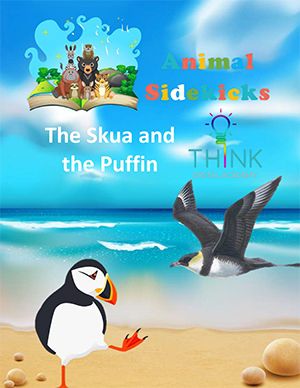
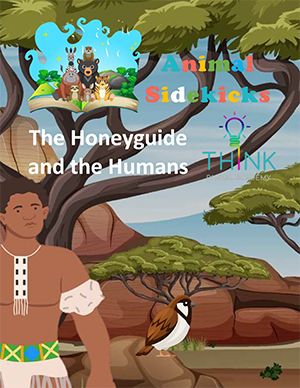
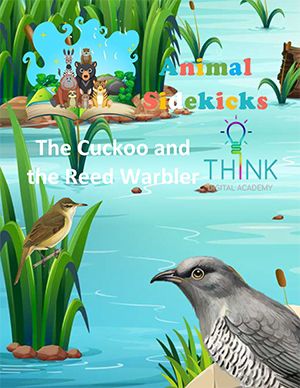
Have you heard about the frog that shares a burrow with a tarantula, or the sloth that wears an algae raincoat? Welcome to the wonderfully weird world of symbiosis — nature's strangest friendships, alliances and rivalries. Animal Sidekicks is Think Digital Academy's collection of twelve fascinating short reads, each introducing an unlikely animal pairing and the real science behind it: oxpeckers riding rhinos, honeyguide birds teaming up with humans, and the cuckoo that tricks other birds into raising its chicks.
We curate collections like this because narrative non-fiction is a bridge genre: children who love animal stories slide naturally into information-text reading, picking up scientific vocabulary along the way. And because reading for pleasure matters as much as reading for learning, each tale is short, lively and full of "wait, that's real?!"
Every story is available as a free children's stories PDF in both English and Afrikaans — perfect for family reading, independent practice, or Afrikaans learners looking for engaging material.
Why Nature and Animal Non-Fiction Improves Reading
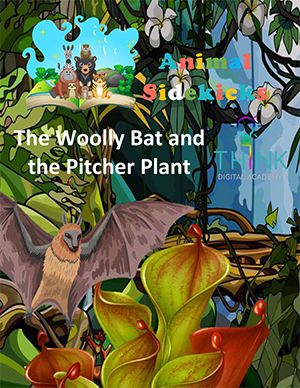
Information texts about the natural world build high-value reading skills. Words like symbiosis, parasite and mutual benefit are met in vivid context, which is how technical vocabulary becomes permanent. Readers practise retrieving facts, comparing cases and following cause and effect in ecosystems, while each story's implicit puzzle — why would a bat sleep inside a pitcher plant? — exercises inference and hypothesis-testing. The "amazing facts" factor supplies powerful motivation: curiosity keeps children reading longer, building stamina and fluency, and the dual-language PDFs reinforce vocabulary in both English and Afrikaans.
Recommended Age
Ideal for readers aged roughly 7 to 12 — Grades 3–6 on the South African CAPS curriculum, or Stages 3–6 on the British International curriculum. Younger animal lovers will enjoy the stories as read-alouds.
Curriculum Alignment
On the CAPS curriculum, the series supports English Home Language and First Additional Language reading outcomes for Grades 3–6 — reading information texts with understanding, summarising key facts and reading for enjoyment — with the Afrikaans versions providing ready-made First Additional Language practice. The cross-curricular link is exceptionally strong: Natural Sciences and Technology covers ecosystems, food chains and the interdependence of living things, so every story doubles as science enrichment. On the British International curriculum, the collection supports English reading objectives across Stages 3–6 for non-fiction, complementing science work on living things and habitats.
Reading Skills Developed
- Scientific vocabulary: terms like symbiosis and parasite are learnt through memorable animal examples.
- Fact retrieval: readers practise finding and recalling information in non-fiction text.
- Comparing and classifying: twelve partnerships invite sorting into helpful, harmful and one-sided.
- Cause and effect: explaining why behaviours benefit animals strengthens logical comprehension.
- Inference and curiosity: surprising pairings prompt readers to form and test explanations.
- Bilingual reading: matched English and Afrikaans PDFs build confidence in two languages.