
Introduction
Some days the world feels loud, heavy and a little overwhelming, and children notice it just as much as adults do. Feel Good Stories is the Reading Room's pause button: a collection of true, uplifting good-news stories about people (and sometimes clever technology) quietly doing extraordinary things.
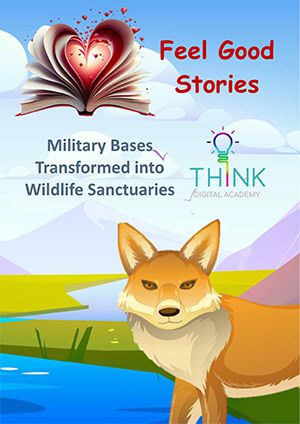
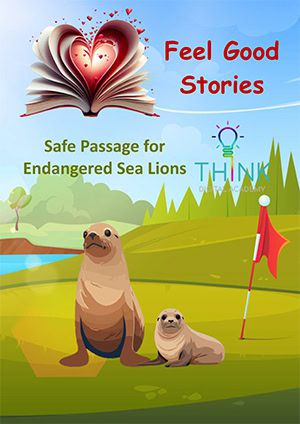
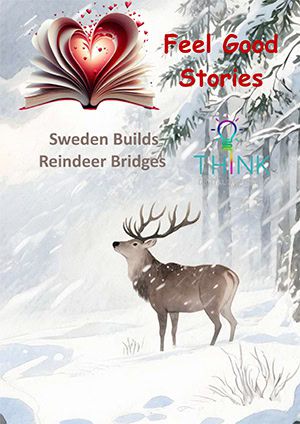
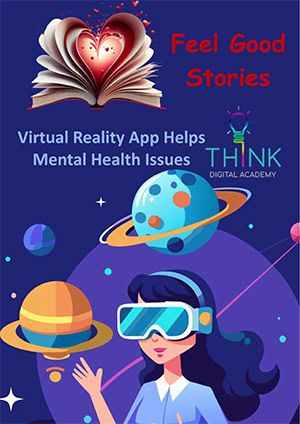
Young readers discover old military bases reborn as wildlife sanctuaries, safe crossings built for endangered sea lions, Sweden's bridges for migrating reindeer, and virtual reality supporting mental health. Each story is a small, real-world reminder that kindness, creativity and care can change things for the better — and that children who read about people solving big problems start to believe they can solve problems too.
The collection suits primary and early high school readers, and it is a superb choice for reluctant readers who prefer real facts to make-believe. Every story is available as a free children's stories PDF in English and Afrikaans, making it a lovely dual-language pick for reading for pleasure at home or in class.
Why Feel-Good Non-Fiction Improves Reading
True stories exercise a different set of reading muscles from fiction. Informational texts about wildlife, animal crossings and new technology build topic vocabulary in science, geography and engineering — the academic word banks comprehension depends on. Readers practise extracting facts, sequencing real events and separating main ideas from detail, core skills in every comprehension exam. Because each story describes a genuine problem and solution, cause-and-effect reasoning develops naturally. And the optimistic subject matter keeps motivation high: children return willingly to texts that leave them feeling hopeful.
Recommended Age
Feel Good Stories suits readers aged roughly 8 to 13 — Grades 3–7 on the South African CAPS curriculum, or Stages 3–7 on the British International curriculum. The accessible true-story format stretches younger strong readers and gives older ones a quick, satisfying read.
Curriculum Alignment
For learners on the CAPS curriculum, this series supports Reading and Viewing outcomes in Home Language and First Additional Language across Grades 3–7, where learners are expected to read and respond to information texts as well as stories. The environmental and technology themes connect naturally with Natural Sciences, Social Sciences and Life Skills. On the British International curriculum, the collection suits Stages 3–7: reading a broad range of non-fiction, retrieving and recording information, and summarising main ideas. With every story in English and Afrikaans, it is also a ready-made resource for bilingual comprehension work.
Reading Skills Developed
- Non-fiction comprehension: finding facts and main ideas in true stories.
- Topic vocabulary: conservation, engineering and technology terms grow academic word knowledge.
- Cause and effect: problem-and-solution stories train logical reasoning.
- Summarising: compact true tales are ideal for retelling key points.
- Critical thinking: weighing up how well each real-world solution works.
- Reading motivation: uplifting content encourages children to come back for more.