
Introduction
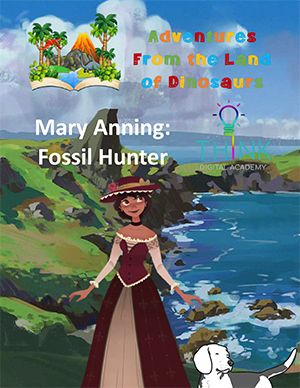
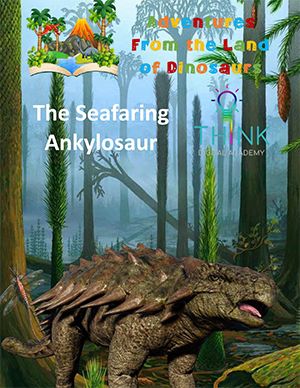
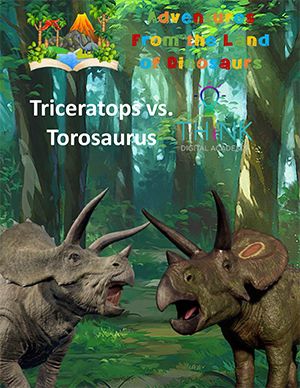
Step back millions of years to a world of towering sauropods, walking fish and fearsome predators. Adventures from the Land of Dinosaurs is Think Digital Academy's collection of ten fact-rich dinosaur stories that turn palaeontology into an adventure young readers can't put down. Palaeontologists are a little like detectives, and that spirit runs through every title: readers puzzle over how a fish learned to walk, why two famous horned dinosaurs might be one and the same, and how pioneering fossil hunter Mary Anning changed science forever.
We curate collections like this one because reading for pleasure is one of the strongest predictors of school success — and many children who shrug at fiction light up the moment you hand them a book about dinosaurs.
Every story is available as a free children's stories PDF in both English and Afrikaans, so families can read on any device, print for offline reading, or practise reading in a second language.
Why Dinosaur and Prehistory Stories Improve Reading
Non-fiction like this builds a distinct set of literacy skills. Scientific words such as fossil, extinction and predator are learnt in meaningful context, which is how new vocabulary sticks. Readers follow cause-and-effect and chronological structures, separate facts from theories, and see how evidence supports a claim — exactly the comprehension skills tested at school. Dinosaurs also have a well-documented motivational pull: children gripped by a topic read more and read longer, building stamina that transfers to every other text. The dual-language PDFs deepen word knowledge in both English and Afrikaans.
Recommended Age
Best for readers aged roughly 8 to 12 — Grades 4–7 on the South African CAPS curriculum, or Stages 4–8 on the British International curriculum. Younger dinosaur fans will enjoy the stories as read-alouds with a parent or teacher.
Curriculum Alignment
On the CAPS curriculum, the series supports English Home Language and First Additional Language reading outcomes for Grades 4–7 — reading information texts for meaning, summarising and reading for enjoyment — with the Afrikaans PDFs giving First Additional Language learners high-interest practice. There are strong cross-curricular links to Natural Sciences (fossils, evolution and the history of life) and to Social Sciences through timelines and the deep past. On the British International curriculum, the stories support English reading objectives across Stages 4–8: reading a broad range of non-fiction, retrieving information and using evidence from a text.
Reading Skills Developed
- Scientific vocabulary: terms like fossil, sauropod and extinction are learnt in context.
- Information retrieval: readers practise locating facts, dates and details in non-fiction text.
- Cause and effect: tracing why species thrived or vanished strengthens logical comprehension.
- Inference from evidence: fossil detective work models exam-style inferential thinking.
- Sequencing: journeying through geological periods builds timeline and chronology skills.
- Bilingual reading: matched English and Afrikaans PDFs grow confidence in both languages.